

Restoration begins with diagnosis.
A permanent decision about a limited resource deserves an objective plan. Anchored by TrichoLAB® digital trichoscopy, we evaluate follicular reserve and scalp architecture before recommending medical, regenerative, or surgical treatment.
Treatment follows the diagnosis.
Once clinical assessment shows what is driving your hair loss, we discuss the strategies that match your pattern, your health history, and your goals. Most plans combine more than one approach.
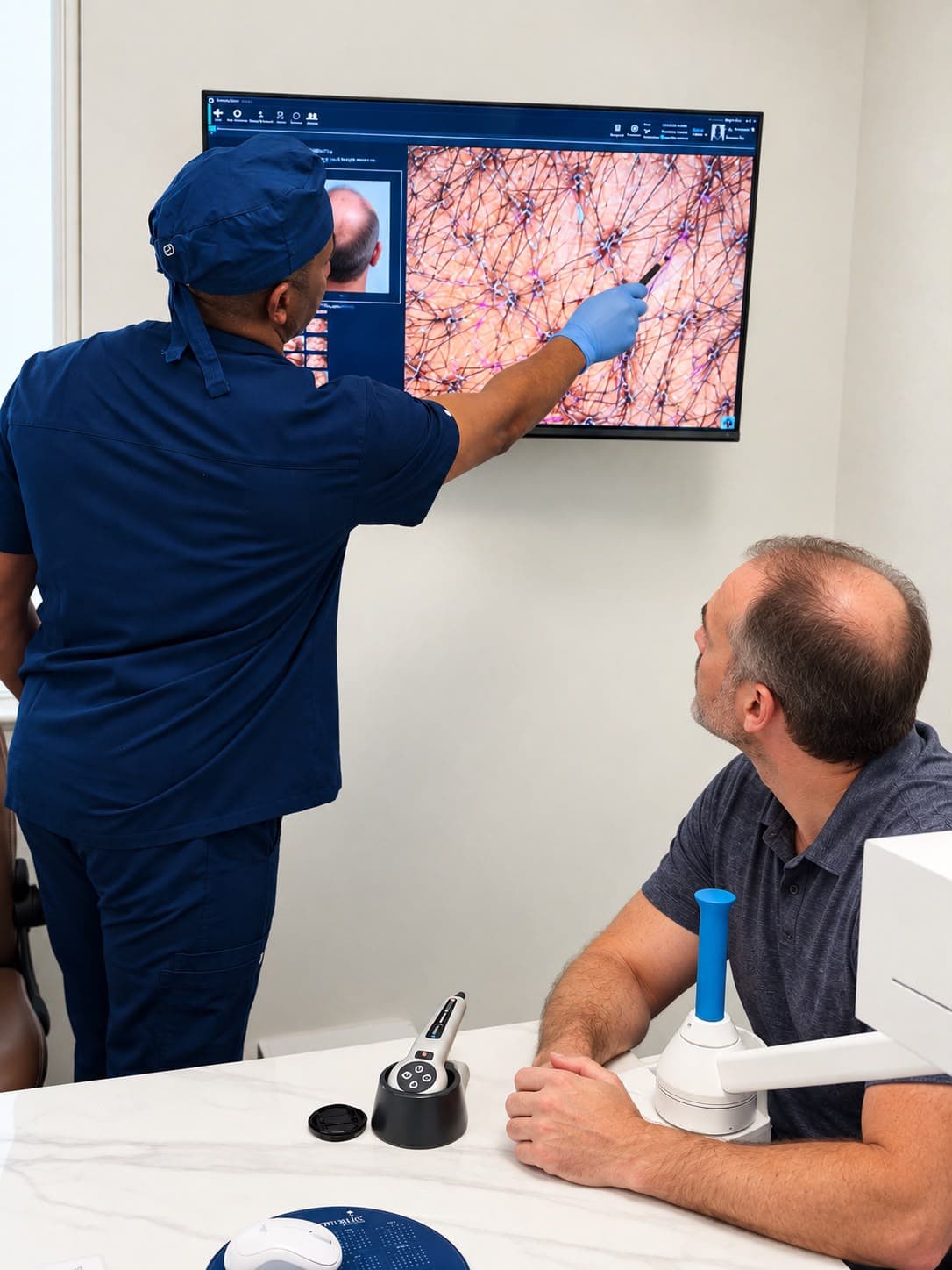
Root Cause Diagnosis
Understand exactly what is driving your hair loss through digital trichoscopy, scalp examination, and medical history before choosing any treatment.
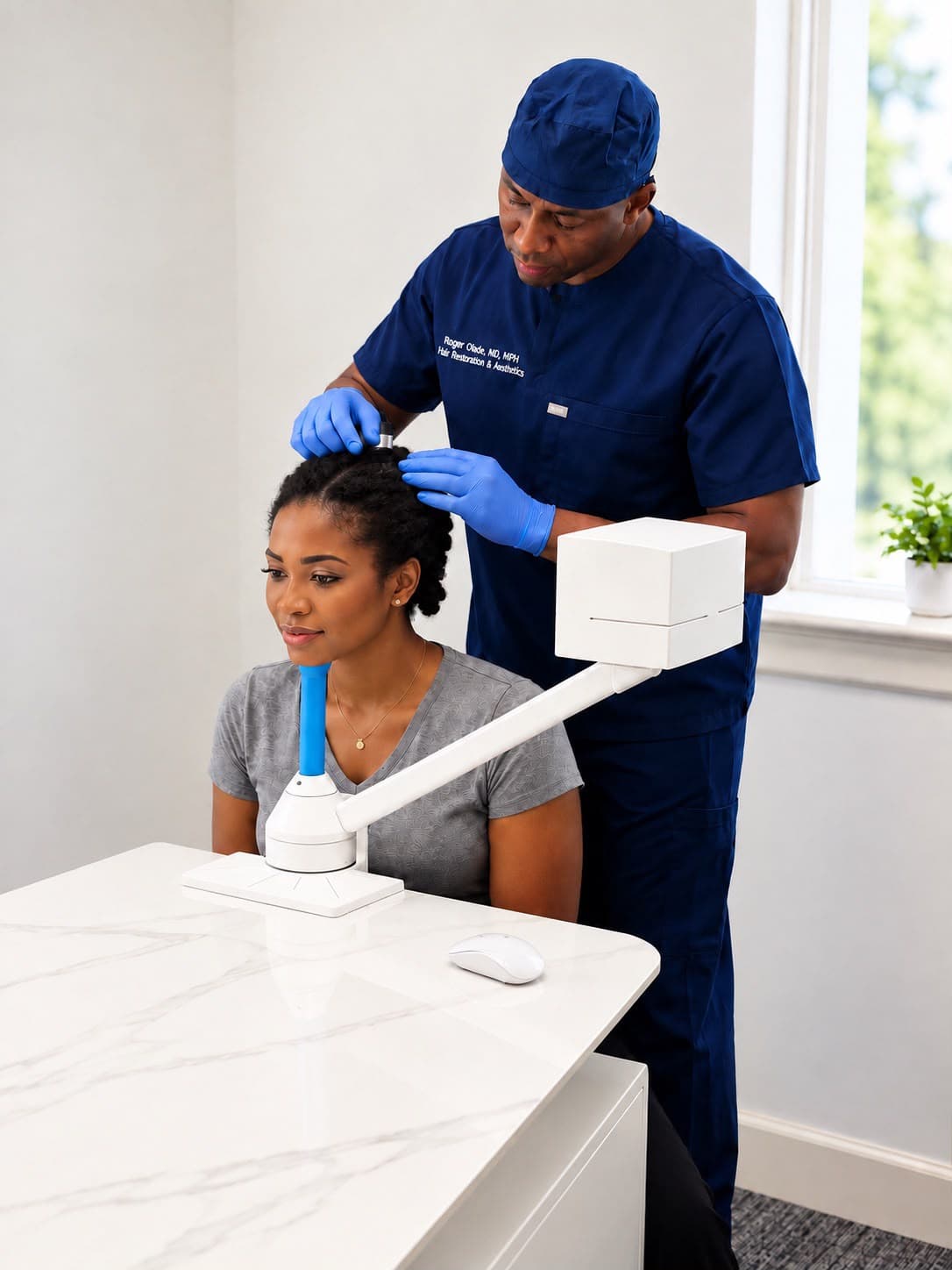
Follicular Preservation
Stabilize and revitalize existing native hair through evidence-based prescription medications, targeted peptides, and autologous cellular therapies.
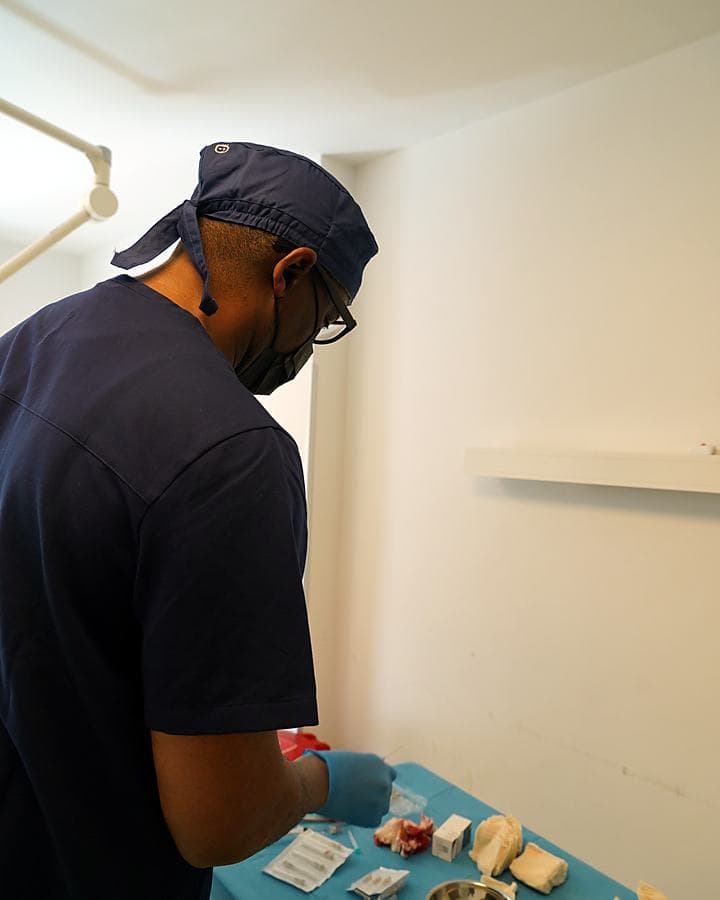
Responsible Restoration
When appropriate, restore lost density with precision FUE or FUT transplantation, planned around donor capacity for a lifetime of natural aging.
See what is actually happening to your hair.
We measure hair loss with objective digital trichoscopy rather than guesswork, combining high-resolution polarized surface imaging with quantitative caliber analysis. Zero shaving required.
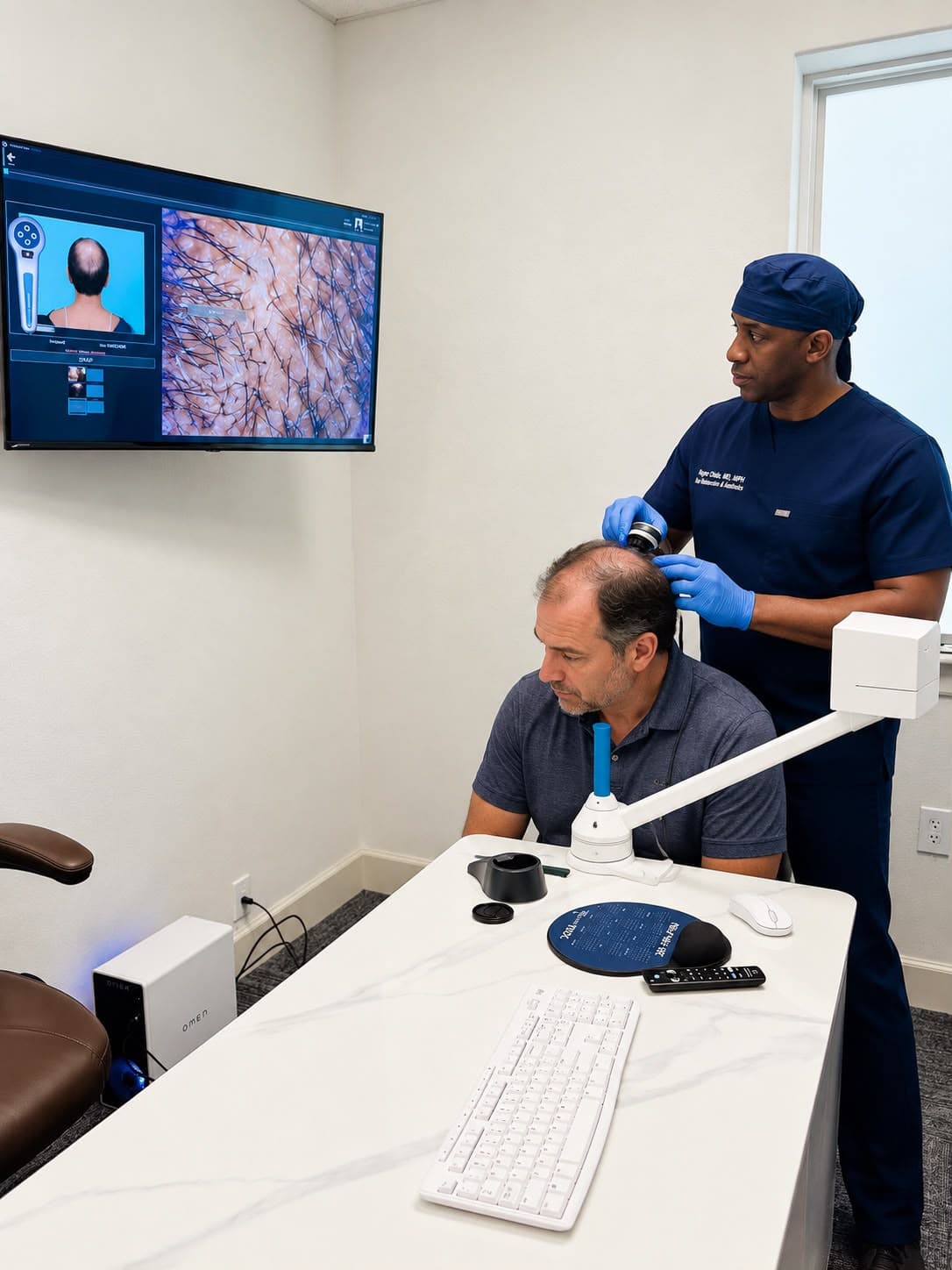
Follicular Density Mapping
Objective measurement of follicular unit concentration (hairs per cm²) across frontal, mid-scalp, vertex, and donor occipital zones—with zero shaving required.
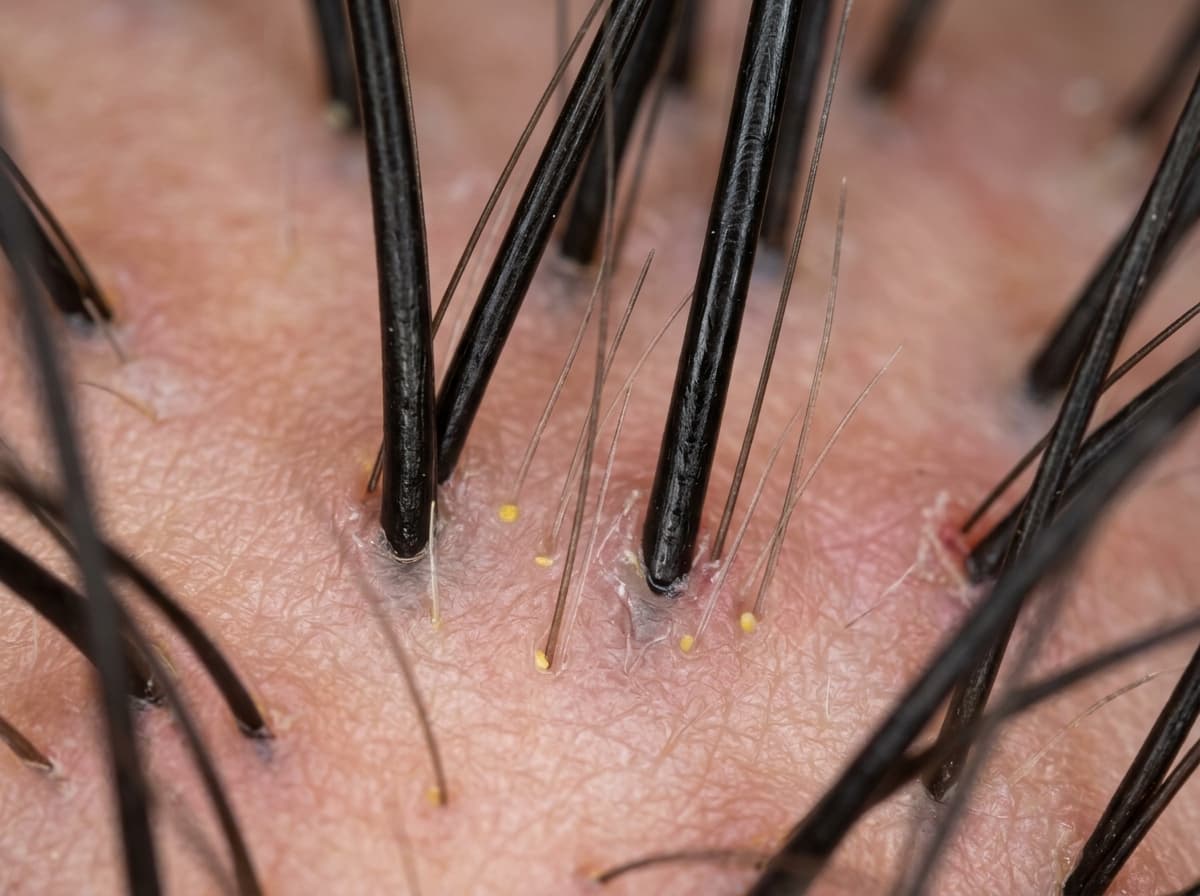
Miniaturization & Caliber
High-magnification optical sensors detect hair shaft diameter variations down to microns, identifying active miniaturization years before visible baldness occurs.
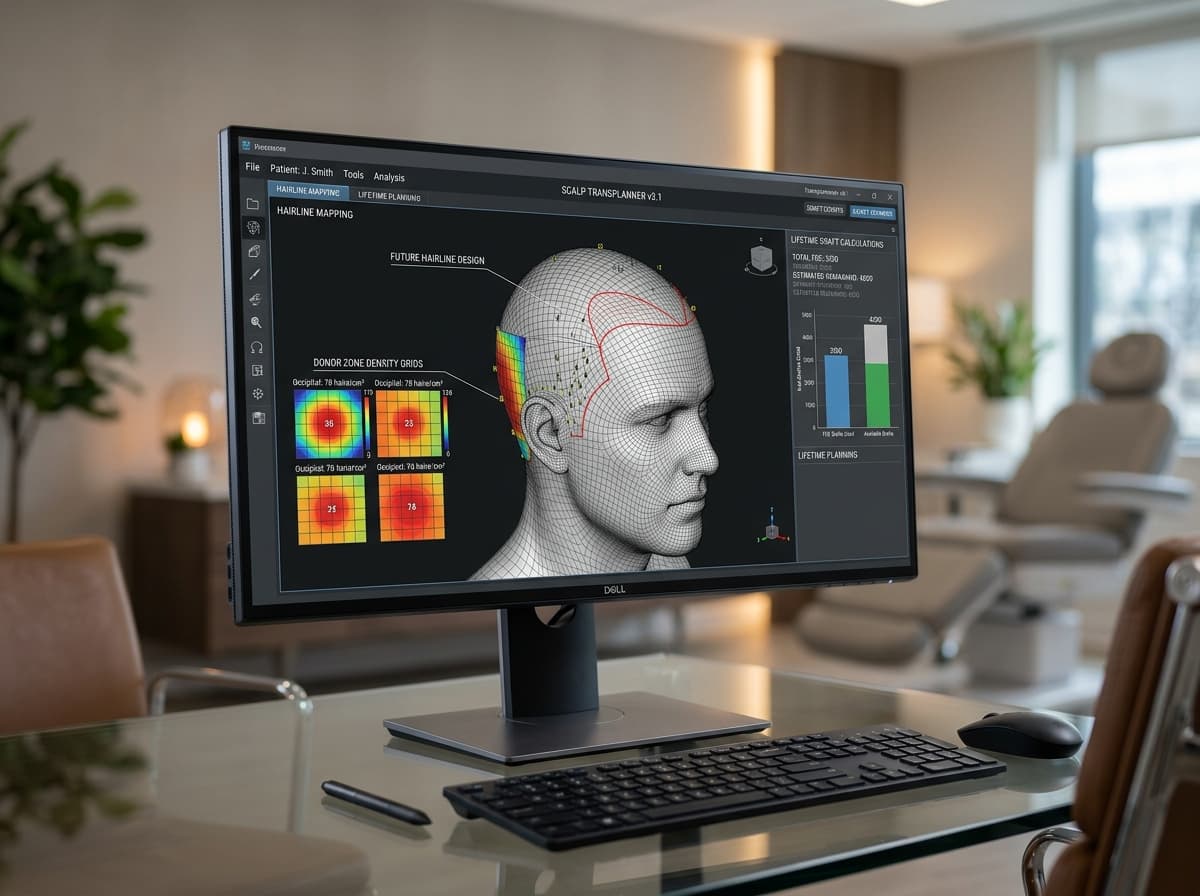
3D Transplanner Modeling
Digital modeling of your total lifetime donor supply to ensure responsible surgical harvest, protecting donor density for natural maturation at 40, 60, and 80.
Treatment Modalities.
Once your assessment shows what is driving your hair loss, we discuss the options that suit your pattern, your medical history and your goals. Most plans combine more than one.

PRP therapy
A concentrated preparation derived from your own blood, injected into targeted areas of the scalp. Considered for selected patients as part of a wider plan, with measured follow-up.

Exosome therapy
A regenerative option discussed where appropriate. We explain what current evidence supports, what it does not, and how we would monitor your response.

Peptide treatment
Topical or injectable peptide preparations, considered alongside other medical treatment rather than used on their own.

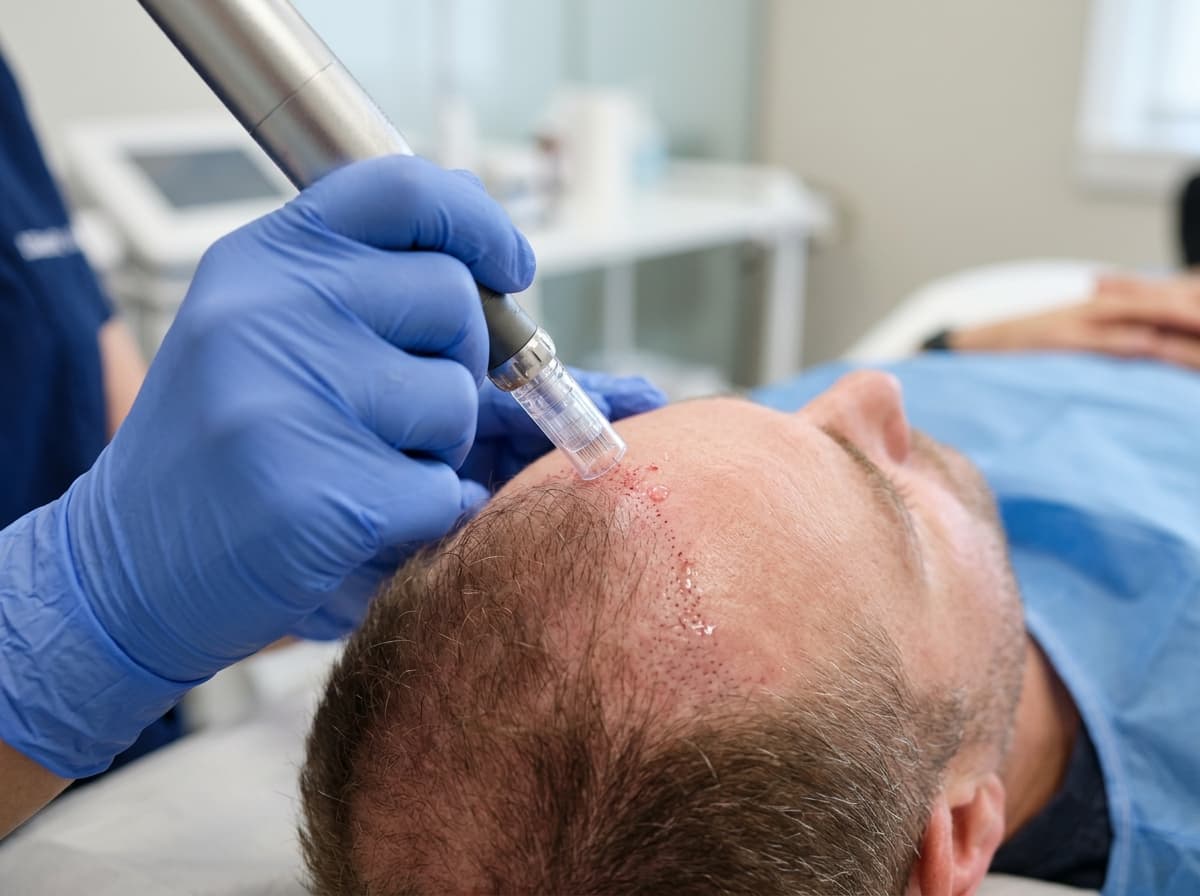
Microneedling
Controlled micro-injury to the scalp, sometimes combined with topical treatment to support the wider plan.

Medical treatment
Established options such as minoxidil and other physician-directed medication, selected according to your diagnosis, health history and goals.
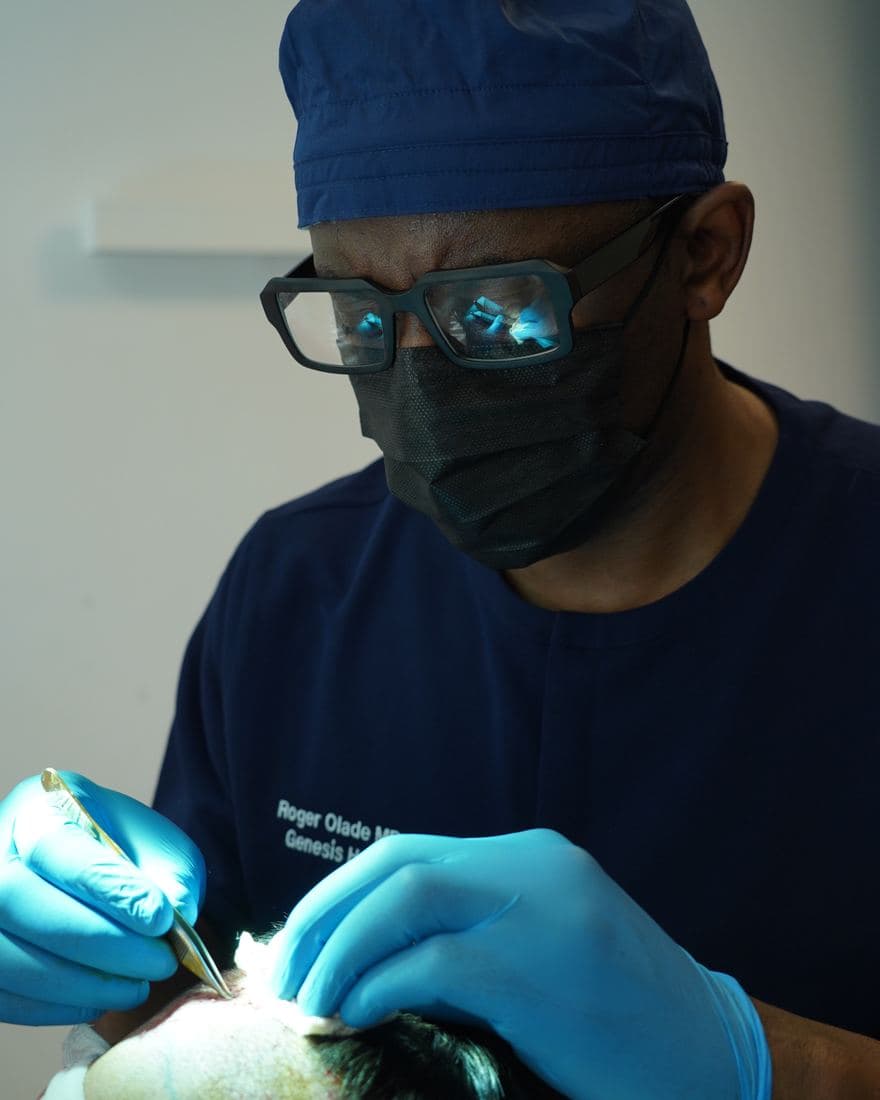
Hair transplantation
Where appropriate, planned around your diagnosis, donor capacity and the long-term pattern of loss.
A permanent decision about a limited resource.
Two people with the same hairline can need completely different plans. A 25-year-old with early recession needs a different strategy than a 55-year-old with stable hair loss.
Follicular Unit Extraction
Individual follicular units are harvested directly from the safe donor zone using precision micro-punch instruments. Because each graft is extracted individually, healing produces dispersed microscopic dot scars that remain virtually undetectable even with shorter or faded hairstyles.
Rapid donor healing • Return to activity in 3–5 days
Frequently Asked Questions
Clear, transparent answers regarding diagnostics, recovery timelines, and surgical decision-making.